
5 Surprising Truths About Christian Nationalism You Might Not KnowNew Post
LS
Introduction: Beyond the Headlines
The term “Christian Nationalism” is an ever-present feature in contemporary political discourse, particularly in the United States. It is easy to assume we understand it as a simple blend of religious belief and patriotism. As a political and historical phenomenon, however, its origins, core motivations, and surprising global reach are far more complex and widely misunderstood than the daily headlines suggest.
This analysis moves beyond caricature to explore five of the most impactful and counter-intuitive truths about Christian Nationalism, grounded in historical and sociological sources. By examining its extremist roots, its fraught relationship with American founding principles, and its modern psychological drivers, we can achieve a deeper, more nuanced understanding of this powerful and polarizing ideology.
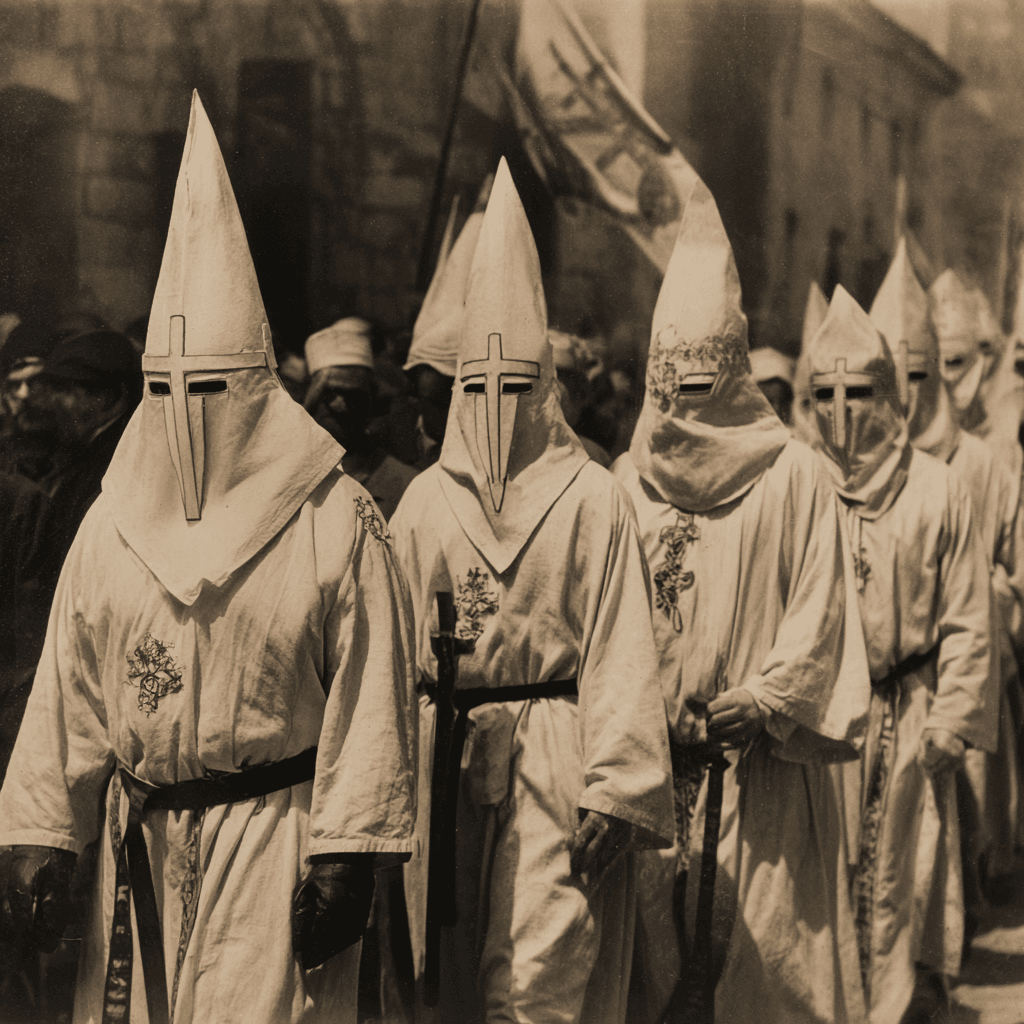
Its Modern American Roots Aren't in a Revival, But in 1940s Fascism
Many assume the term "Christian Nationalism" emerged from a theological seminary or a grassroots religious revival. The historical record reveals a much starker origin. The term was coined and popularized in the United States not by a theologian, but by Gerald Lyman Kenneth Smith, a political organizer active in the 1930s and 40s.
Smith, founder of the "Christian Nationalist Crusade" and the "Christian Nationalist Party," was no mainstream religious figure. Historical sources identify him as a "fascist, a rabid antisemite and anti-communist." His crusade was animated by a conspiratorial worldview; he preached that Communism was a "Jewish plot" and that communists nefariously used Black people as "their pawns to try to overthrow white Christian American civilization."
This origin is profoundly significant. It frames the movement not as a benign spiritual or patriotic endeavor, but as an ideology historically rooted in explicitly hateful, racist, and authoritarian politics. This foundational fear of “the other”—whether Jewish, Black, or communist—serves as a historical precedent for the modern cultural anxieties that now fuel the movement.
Christian Nationalism was founded upon antisemitism, anti-communism and the upkeep of a white Christian ethnostate. It is rooted in hate and relies on discrimination by design. — Rhys Long, Americans United
America's Founders Deliberately Chose Not to Create an Official "Christian Nation"
A central claim of Christian Nationalism is that the United States was founded to be an explicitly Christian nation. An examination of the nation's legal and constitutional framework, however, reveals the opposite. On a formal level, the country was established as a secular republic.
The evidence is written directly into the nation's founding documents. Article 6 of the Constitution explicitly forbids religious tests for holding public office. The First Amendment goes further, guaranteeing that the government will not establish a state church—a definitive break from the European model. Thomas Jefferson famously reinforced this with his concept of a "wall of separation" between church and state.
This legal secularism, however, existed alongside a culture that was inescapably Christian. Even skeptical founders like Benjamin Franklin used biblical imagery, at one point proposing the new national seal depict Moses parting the Red Sea. This tension harbors a profound, tragic irony. As historian Catherine Brekus notes, revolutionary patriots invoked the Exodus story—a narrative of liberation from slavery—"at the same time that they were literally holding slaves." This foundational hypocrisy reveals the deep and unresolved conflicts at the heart of America's identity. It is precisely because Christian dominance was a cultural norm rather than a constitutional guarantee that its perceived erosion today feels so existentially threatening to the movement's adherents.
I often get asked, you know, was the United States founded as a Christian nation? On a formal level, the answer is absolutely no. The founders provided for separation of church and state. — Catherine Brekus, Harvard Divinity School
It's Fueled More by Status Anxiety Than Piety
While theological conviction is part of the movement, sociological analysis suggests a more powerful modern driver is a profound sense of "status anxiety"—a fear of losing cultural dominance. Experts point to the 1990s as a period of "peak conservative Christian dominance" in American culture, a time when Christian bookstores were ubiquitous and contemporary Christian music was an ambient presence in public life.
Since then, that influence has steadily eroded, marked by the rise of the religiously unaffiliated, often called the "Nones." This demographic sea change is stark: in the early 1990s, approximately 90% of the U.S. population identified as Christian, a figure that has since fallen to around 66%. For many, this has catalyzed a political identity crisis, creating a feeling of cultural displacement and a fear that a certain way of life is being lost forever. This potent blend of nostalgia and fear helps explain how the movement's message can find purchase across demographic lines that might otherwise seem surprising.
I think the key to note is that episodes of Christian Nationalism in American history... tend to correspond with feelings of anxiety and are ultimately rooted in cultural fear that some status or place or significance is being lost and might never return. — Paul Matzko, Cato Institute
It Isn't an Exclusively White Movement
The term is often presented as "white Christian Nationalism," and for good reason, as its most prominent expressions are often tied to white identity politics. Polling, however, reveals a more complex picture, showing that sympathy for its core tenets is not confined to one racial group. This surprising statistic reveals a complex dynamic. Scholar Bradley Onishi explains that while people of color might be welcome in such communities, their distinct cultural expressions are often implicitly erased. A quinceañera, for instance, might be dismissed as a "Mexican thing" rather than a "Christian thing," ensuring the movement's culture remains, as Onishi notes, "coded and contoured in a kind of white American... context." This dynamic allows for a multi-racial appeal while simultaneously reinforcing a white-coded cultural default. This ability to adapt its appeal by coding identity is not limited to domestic contexts; it is also central to its expansion abroad.
According to one study, about 20% of white Americans sympathize with these beliefs, as do around 20% of Black Americans. — NPR's "A History of Christian Nationalism"
It's Going Global
While deeply rooted in American history, Christian Nationalism is not an exclusively American phenomenon. Its rhetoric and tactics are being actively exported and adapted in other Western nations, most notably in the United Kingdom.
In Britain, far-right groups like Britain First and UKIP have increasingly adopted Christian symbolism, not for theological purposes, but as a tool for cultural warfare in anti-Muslim and anti-immigrant campaigns. American organizations like Turning Point have established UK offshoots, helping to import this style of activism. Rallies led by figures such as Tommy Robinson have featured supporters waving crosses and chanting "Christ is King" to confront Muslim speakers.
In this context, Christianity is being stripped of its theological substance and "repurposed as a racialised marker of Britishness." This serves to exclude immigrants, Muslims, and anyone else deemed "un-British," demonstrating the ideology's potent adaptability as a global political tool.
Born in the United States and steeped in white supremacist theology, it has begun to seep into British political discourse, often under the guise of “defending Christian values.” — Searchlight
Conclusion: A Story of Identity and Power
Christian Nationalism, therefore, is not merely a collection of surprising facts but a cohesive political ideology that functions as a powerful tool for identity and power. Its explicitly racist and antisemitic origins provide a historical blueprint for exploiting the unresolved, hypocritical tensions in America's secular founding. It weaponizes the potent catalyst of modern status anxiety over demographic change, channeling that fear into a political force with a surprisingly broad, though culturally policed, demographic appeal. Now, this uniquely American formula is proving adaptable, finding fertile ground in its expanding global footprint.
As this fusion of faith and national identity continues to shape politics, the critical question we must all ask is not just what it means for the state, but what it means for the faith it claims to represent?